
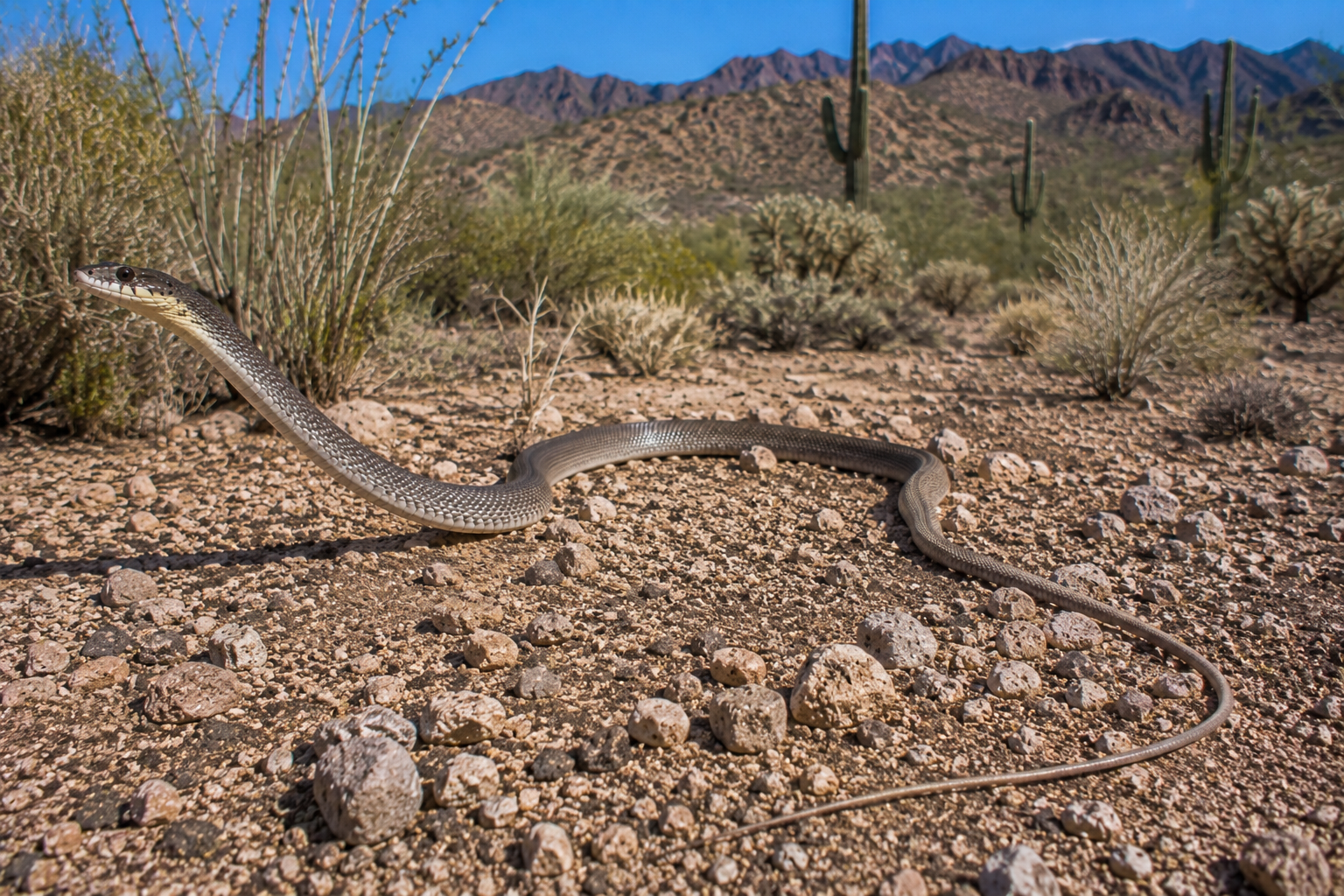
Coachwhip Snake (Masticophis flagellum)
The coachwhip is one of North America's longest and fastest non-venomous snakes, capable of reaching speeds over 4 mph. It gets its name from the distinctive scales on its tail, which create a braided appearance similar to a leather whip. These active daytime hunters rely on excellent eyesight and are often seen raising their head and neck high above the ground, a behavior known as "periscoping," to scan their surroundings.
Appearance varies across the species' range. Eastern coachwhips typically have a dark head and neck that gradually fade into tan or cream toward the tail, while western populations are often reddish, pink, or light tan. Adults commonly measure 4–6 feet in length, although exceptional individuals can exceed 8 feet. Despite their impressive size, they are slender snakes that rarely weigh more than 1 pound.
Coachwhips are opportunistic predators that feed on a wide variety of prey, including lizards, small mammals, birds, eggs, insects, frogs, and even other snakes. Unlike constrictors, they overpower prey by pinning it with their jaws or body before swallowing it.
When threatened, a coachwhip's first response is usually escape, often sprinting into nearby vegetation, trees, or burrows. If cornered, it may vibrate its tail to mimic a rattlesnake, strike repeatedly, or release a foul-smelling musk. Some individuals may even feign death by going limp and rolling onto their back.
Coachwhips reproduce by laying eggs. After mating in spring, females deposit 4–24 eggs in loose soil, rotting logs, or abandoned burrows. The eggs hatch in late summer or early fall, and the young, which measure about 12–16 inches long at birth, receive no parental care and are fully independent from the moment they emerge.
In the wild, coachwhips typically live around 13 years, though individuals in captivity have been known to reach 20 years of age. Their speed, keen eyesight, and distinctive whip-like tail make them one of the most recognizable snakes of the American Southwest.