
Identification
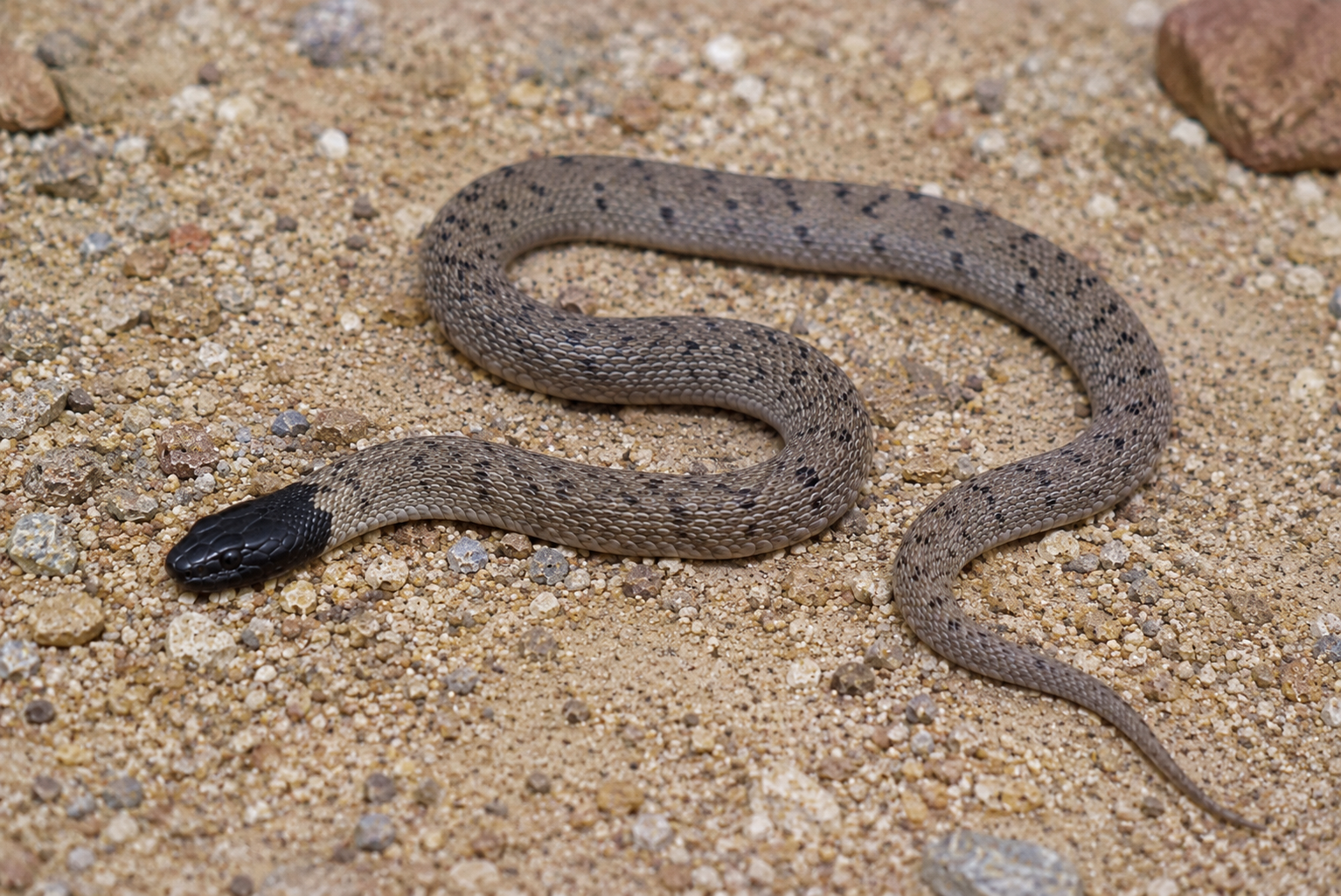
The Southwestern Blackhead Snake (Tantilla hobartsmithi) is one of Arizona's smallest and most secretive snakes. It is easily recognized by its glossy black head, which contrasts sharply with its slender tan, gray, or light brown body and a narrow cream or pale yellow collar just behind the head. Its smooth, shiny scales and tiny size allow it to move easily beneath rocks, leaf litter, and loose soil, where it spends most of its life hidden from view.
Size and Weight
Adult Southwestern Blackhead Snakes typically measure between 8 and 15 inches (20–38 cm) in length and weigh only about 0.2 to 0.8 ounces (6–22 grams). Hatchlings are usually 4 to 5 inches (10–13 cm) long and are fully independent from birth.
Diet
This species feeds primarily on small, soft-bodied invertebrates, including centipedes, insect larvae, termites, spiders, and other tiny arthropods found beneath rocks and in loose soil. Their small rear teeth help them capture and consume prey that larger snakes often ignore.
Defensive Behavior
The Southwestern Blackhead Snake is completely harmless and rarely attempts to bite when disturbed. Instead, it relies on remaining motionless, quickly burrowing underground, or releasing a foul-smelling musk to discourage predators while escaping.
Reproduction
Breeding typically occurs during the spring, with females laying small clutches of 1-3 eggs beneath rocks, logs, or in moist underground chambers during early summer. The eggs hatch after approximately 6 to 8 weeks, and the young receive no parental care.
Lifespan
Although little research has been conducted on this secretive species, Southwestern Blackhead Snakes are estimated to live between 8 and 12 years in the wild, with captive individuals occasionally living longer. Their underground lifestyle helps reduce encounters with predators and contributes to their survival, though exact lifespans for this particular species in the wild are very difficult to study due to their secretive nature.