
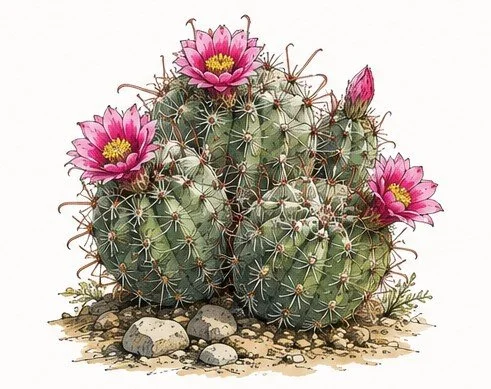
Arizona Fishhook Cactus (Mammillaria grahamii)
The Arizona Fishhook Cactus is a small desert cactus native to the Sonoran Desert region. Known for its bright pink spring flowers and distinctive hooked spines, this species is one of the most recognizable small cacti found in Arizona. It may grow as a single stem or form small clusters over time. Although the name "fishhook cactus" is sometimes used for other cactus species, it most commonly refers to Mammillaria grahamii in Arizona.
Where It's Found
This species occurs throughout much of the Sonoran Desert, including southern Arizona, southwestern New Mexico, and portions of northern Mexico. It often grows beneath the protective cover of larger desert plants such as palo verde trees, mesquite, and creosote bushes. These "nurse plants" provide shade and help shield the cactus from intense desert temperatures, making the cactus surprisingly difficult to spot in the wild.
Size
The Arizona Fishhook Cactus remains relatively small throughout its life. Mature plants typically reach heights of up to 12 inches (30 cm) and usually measure between 2 and 3 inches (5–8 cm) in diameter. Its compact, cylindrical shape gives it the appearance of a pincushion cactus.
Growth Rate and Structure
Growth is exceptionally slow, with plants often adding only about 1 inch (2.5 cm) of height per year under favorable conditions. Unlike branching cactus species, the Arizona Fishhook Cactus does not develop arms or limbs. Its growth remains confined to a simple cylindrical stem, although older specimens may produce offsets that create small clusters. This growth habit differs greatly from larger desert cacti such as the saguaro, which may require 50 to 100 years of growth before producing its first branches.
Root System
The cactus possesses a shallow but highly effective root network designed to take advantage of infrequent desert rainfall. During seasonal monsoon storms, the roots can rapidly absorb water from the surrounding soil. This moisture is then stored within the fleshy stem, allowing the plant to survive long periods of drought.
Defense System
A dense covering of spines protects the Arizona Fishhook Cactus from herbivores and accidental damage. Each areole can produce numerous spines, often totaling as many as 30. The most noticeable feature is the central spine, which is dark in color and curves into a distinct hook at the tip. These sharp, hooked spines help discourage animals from feeding on or trampling the cactus.
Lifecycle and Lifespan
During spring, the Arizona Fishhook Cactus produces a ring of vibrant pink flowers around the upper portion of the stem. Following pollination, these blossoms develop into bright red fruits that are edible and attractive to wildlife. The fruits contain seeds that help disperse and establish new plants throughout suitable desert habitats. Individual plants can survive for several decades when growing in stable conditions, making them long-lived members of the Sonoran Desert ecosystem.