
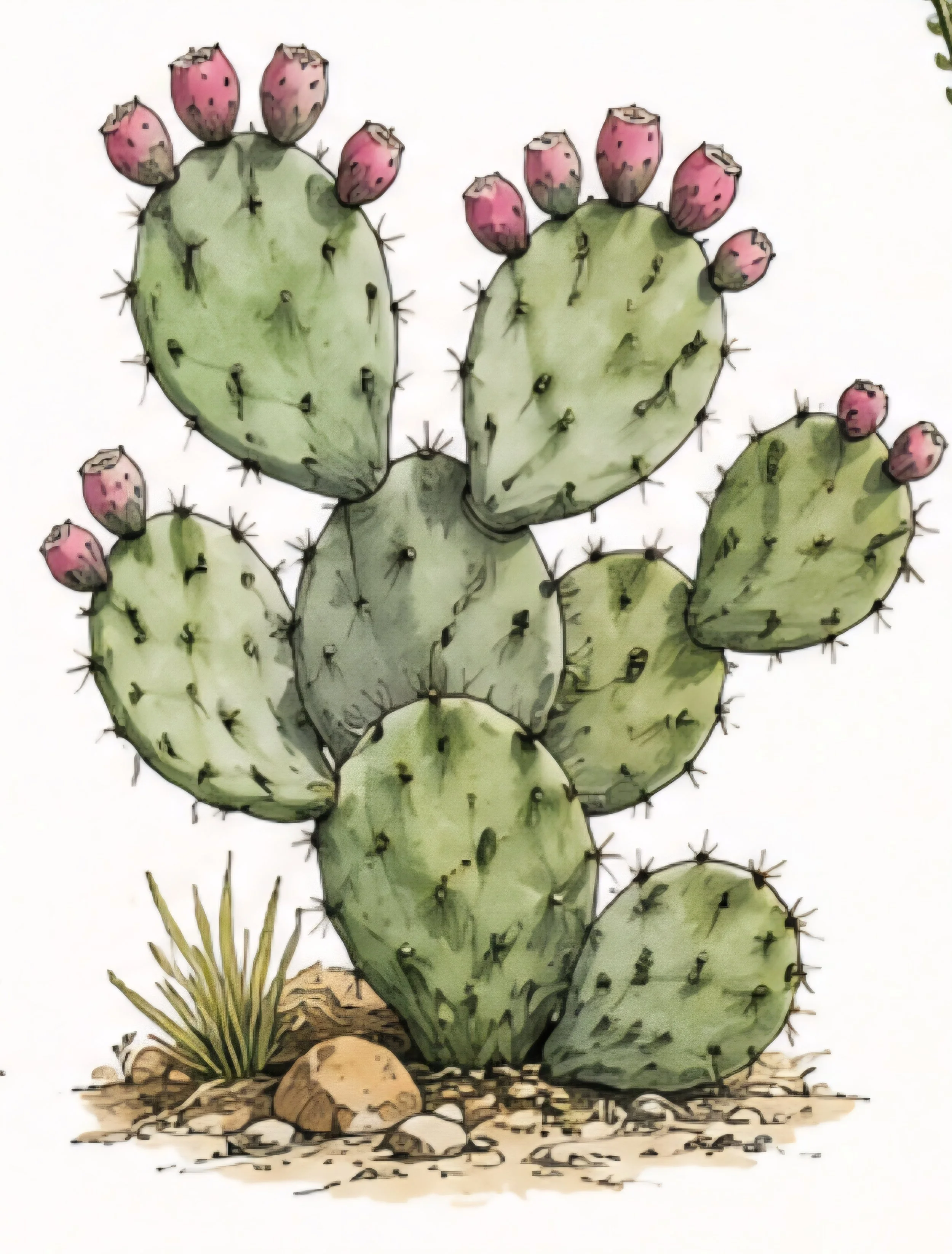
Arizona Prickly Pear (Opuntia engelmannii)
Growth Rate
The Arizona Prickly Pear is one of the most recognizable cacti of the American Southwest and is known for its relatively rapid growth compared to many other desert cactus species. Under favorable conditions, it regularly produces several new pads each growing season. A single rooted pad or cutting can become an established, multi-padded cactus within approximately three to four years, eventually developing into a large, mature clump.
Where It's Found
This species is native to the deserts of the southwestern United States and northern Mexico, with particularly strong populations throughout the Sonoran and Chihuahuan Deserts. It is well adapted to hot, arid environments and is commonly encountered in rocky desert terrain, open plains, washes, foothills, and other areas with well-drained soils. Its ability to tolerate extreme heat and prolonged drought allows it to thrive across a wide range of desert habitats.
Size
Mature Arizona Prickly Pears typically reach heights of 3 to 5 feet (0.9–1.5 m). In especially favorable locations with adequate space, protection, and moisture, some specimens can occasionally grow as tall as 8 feet (2.4 m). Rather than growing as a single upright stem, the plant usually forms broad, shrub-like clusters that may spread 5 to 6 feet (1.5–1.8 m) or more across, creating dense stands of overlapping pads.
Root System
The Arizona Prickly Pear develops a shallow but extensive root system that remains close to the soil surface. Most roots occupy only the upper few inches of soil, where they can quickly absorb available moisture. This wide-spreading network allows the cactus to take advantage of brief rainfall events, efficiently collecting water from light showers as well as larger desert storms before it can evaporate or drain away.
Defense System
Like many desert cacti, the Arizona Prickly Pear relies on multiple defenses to protect itself from animals and environmental pressures. Its most visible protection comes from its long, rigid spines, which can reach lengths of up to 3 inches (7.6 cm) and help discourage browsing by wildlife. In addition to these larger spines, the cactus produces clusters of tiny barbed bristles known as glochids. These microscopic structures detach easily when touched and can become embedded in skin, making contact with the plant particularly unpleasant.
The species also possesses an effective survival strategy through vegetative reproduction. Pads that break away from the parent plant often remain viable and can root directly into the soil. Once established, these detached pads are capable of growing into entirely new plants, allowing the species to spread and recover from damage.
Pads and Growth Habit
The flattened, oval structures commonly referred to as the cactus's "arms" are actually modified stem segments known as pads. These pads serve as the primary sites for water storage and photosynthesis. As the plant grows, new pads emerge from the upper edges and margins of older pads, usually during the active spring and summer growing seasons.
Healthy plants commonly produce multiple new pads each year, resulting in steady expansion and the formation of dense, branching clusters. Because of this growth pattern, Arizona Prickly Pears can develop substantial size and complexity within a relatively short period rather than requiring decades to produce new growth.