
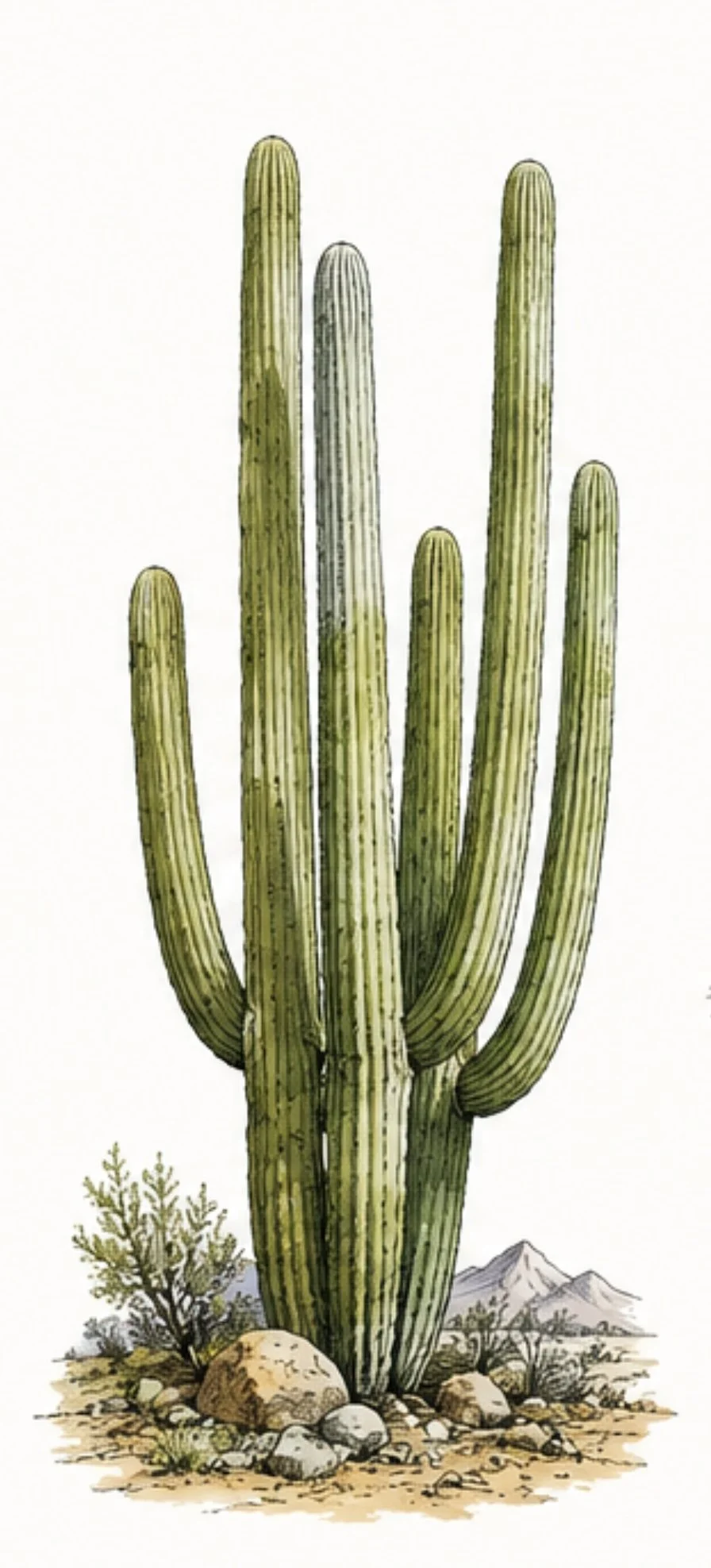
Arizona Organ Pipe Cactus (Stenocereus thurberi)
The Arizona Organ Pipe Cactus is one of the most recognizable plants of the Sonoran Desert. Its name comes from the numerous upright stems that grow together in dense clusters, creating an appearance similar to the pipes of a traditional church organ. This striking cactus is considered one of the signature species of the desert regions of southern Arizona and northwestern Mexico.
Where It Is Found
Organ Pipe Cacti are most commonly found on warm, rocky slopes, particularly those facing south where they receive maximum sunlight and retain heat throughout the year. In the United States, this species occurs naturally only in the extreme southwestern portion of Arizona. Most of the American population is protected within Organ Pipe Cactus National Monument, located near the border with Mexico. Beyond Arizona, its range extends throughout much of the Mexican states of Sonora and Sinaloa, as well as large portions of the Baja California Peninsula.
Growth Rate & Size
This cactus is known for its exceptionally slow rate of growth. Under normal conditions, it typically adds only about 2.5 inches (6 cm) of height each year, with the fastest growth occurring during the summer monsoon season when rainfall is most abundant.
Mature specimens generally reach heights of 15 to 20 feet (4.5 to 6 meters), although particularly large individuals in Mexico may grow to nearly 30 feet (9 meters). Established plants often form broad clusters that can spread 12 to 15 feet (3.5 to 4.5 meters) across.
Root System
Rather than producing a deep taproot, the Organ Pipe Cactus develops an extensive network of shallow, fibrous roots located close to the soil surface. Most of these roots occupy only the upper few inches of soil, allowing the plant to rapidly absorb moisture from brief desert rainstorms before the water evaporates or drains away.
Defense Mechanisms
The primary defense of the Organ Pipe Cactus is its dense covering of long, sharp spines. These spines range from dark brown to nearly black and emerge from raised structures known as areoles. In addition to discouraging animals from feeding on the plant, the spines help provide shade to sensitive growing tissue, reducing the risk of damage from intense desert sunlight.
The species also depends heavily on its hot desert environment for survival. Unlike many other desert plants, it has limited tolerance for freezing temperatures. Extended periods of frost can damage or kill young growth, making warm climates essential to its long-term survival.
Developing Arms and Branches
Unlike the Saguaro, which typically develops a single trunk before producing arms later in life, the Organ Pipe Cactus branches from near its base. New stems emerge close to ground level and gradually grow upward alongside existing stems.
Because of its slow growth rate and dependence on favorable moisture conditions, a young plant may not begin producing its first major vertical stem until it is approximately 30 years old. As the cactus matures, additional stems periodically develop, eventually forming the dense cluster of upright "pipes" that gives the species its common name.