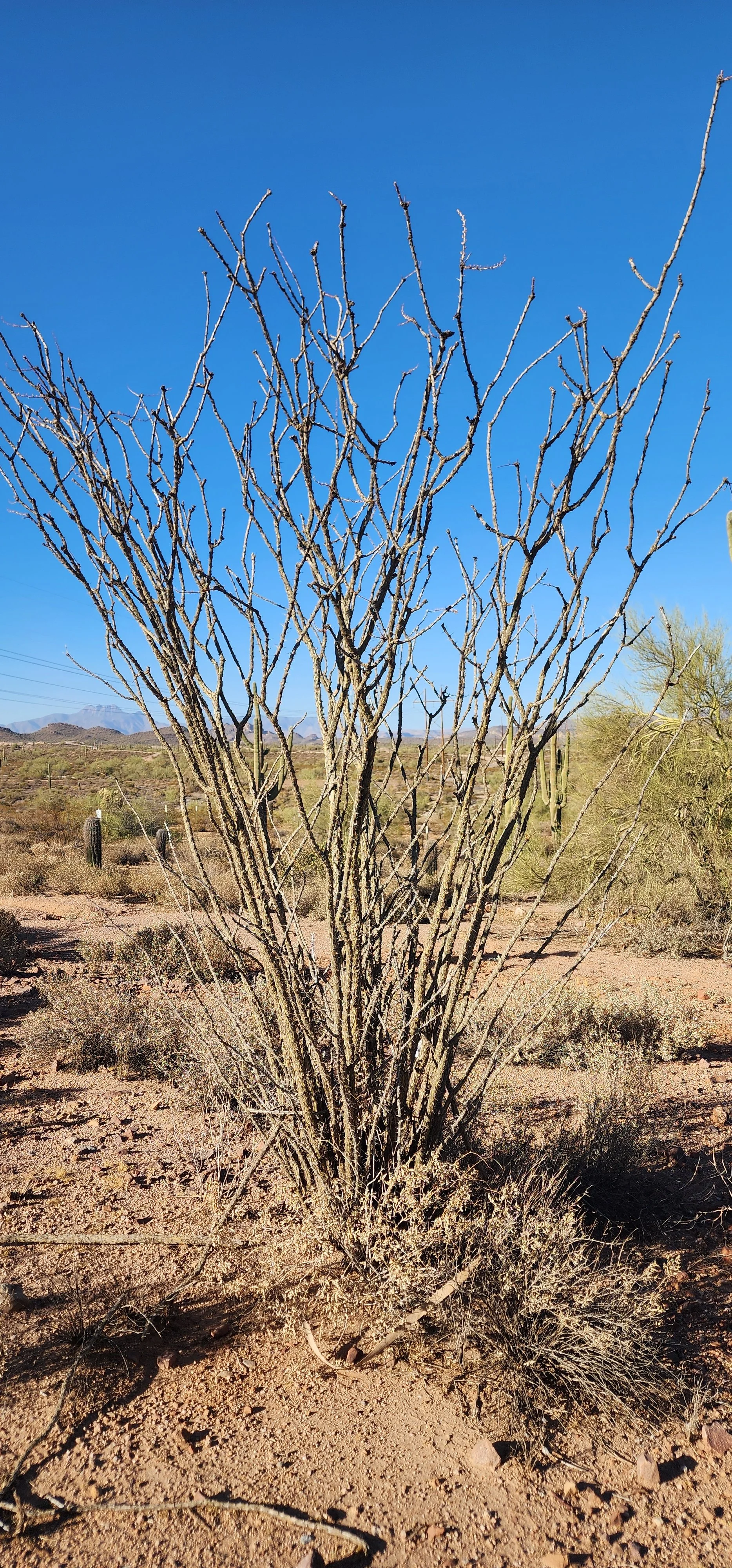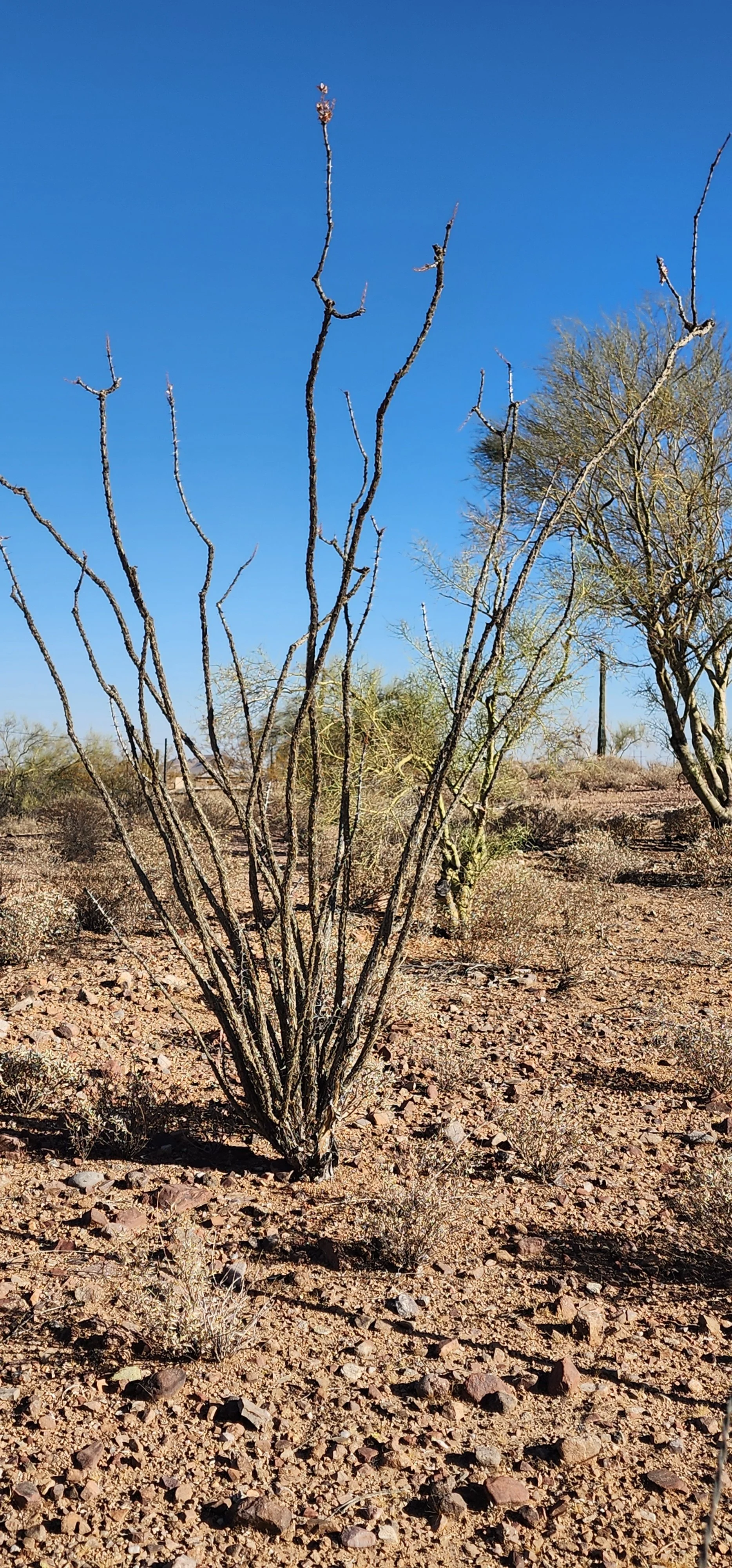
Ocotillo (Fouquieria splendens)
Where It’s Found
The ocotillo is one of the most recognizable plants of the American Southwest. Although it is often mistaken for a cactus because of its spiny stems and desert habitat, it is actually a drought-deciduous shrub uniquely adapted to survive in some of North America's harshest environments. It is native to the arid regions of the southwestern United States and northern Mexico, where it grows throughout the Sonoran, Chihuahuan, and Mojave Deserts.
In Arizona, ocotillos are most commonly found below elevations of 6,000 feet. They thrive on rocky, well-drained soils and are frequently seen on desert slopes, mesas, gravelly plains, and sun-exposed hillsides. Their ability to withstand extreme heat and prolonged dry conditions makes them a characteristic feature of many desert landscapes.
Size & Growth Rate
Mature ocotillos typically reach heights of 10 to 20 feet in the wild, although exceptionally large specimens may grow as tall as 30 feet. Their spread often matches their height, creating a broad, vase-shaped form composed of numerous upright canes. At ground level, the base of an established plant commonly reaches about 1 foot in diameter.
Growth rates vary considerably depending on rainfall and available moisture. During favorable conditions, individual canes may extend approximately 10 to 12 inches in a year. In particularly wet years, vigorous plants can produce as much as 2 to 3 feet of new growth. Because rainfall in desert environments is unpredictable, periods of rapid growth are often followed by years of relatively little change.
The Root System
Unlike many desert plants that rely on deep taproots to access underground water sources, the ocotillo develops a shallow, extensive network of fibrous roots located close to the soil surface. This specialized root system allows the plant to quickly absorb large amounts of water from brief but intense desert rainstorms, particularly during summer monsoon events.
Because the majority of the root system remains near the surface, newly transplanted ocotillos can require significant time to establish themselves. Bare-root specimens, which are commonly sold in the nursery trade, may take anywhere from six months to two years to fully anchor and resume strong growth after planting.
Natural Defense
The ocotillo's primary defense against herbivores is the dense covering of sharp spines that line each stem. These spines, which commonly measure between 1 and 1.5 inches in length, help deter animals from feeding on the plant's tissues. The protective armor is particularly important in desert ecosystems where vegetation is often limited and browsing pressure can be intense.
Despite these defenses, severe and prolonged drought conditions may drive hungry wildlife to feed on ocotillos. In such situations, animals may push past the spines to reach the moisture-rich inner tissues contained within the stems.
Branching & Second Arms
Most ocotillos produce their tall, whip-like stems directly from a central root crown at the base of the plant. Young plants started from a single cutting usually develop as a solitary cane during their early years. Additional stems often do not appear immediately and may take two to three years to emerge naturally from the base.
The large, multi-stemmed specimens commonly seen in the wild are typically the result of many years or even decades of growth. In some cases, the appearance of a mature clump may also result from multiple cuttings being planted together, creating the dense cluster of canes that many people associate with older ocotillos.