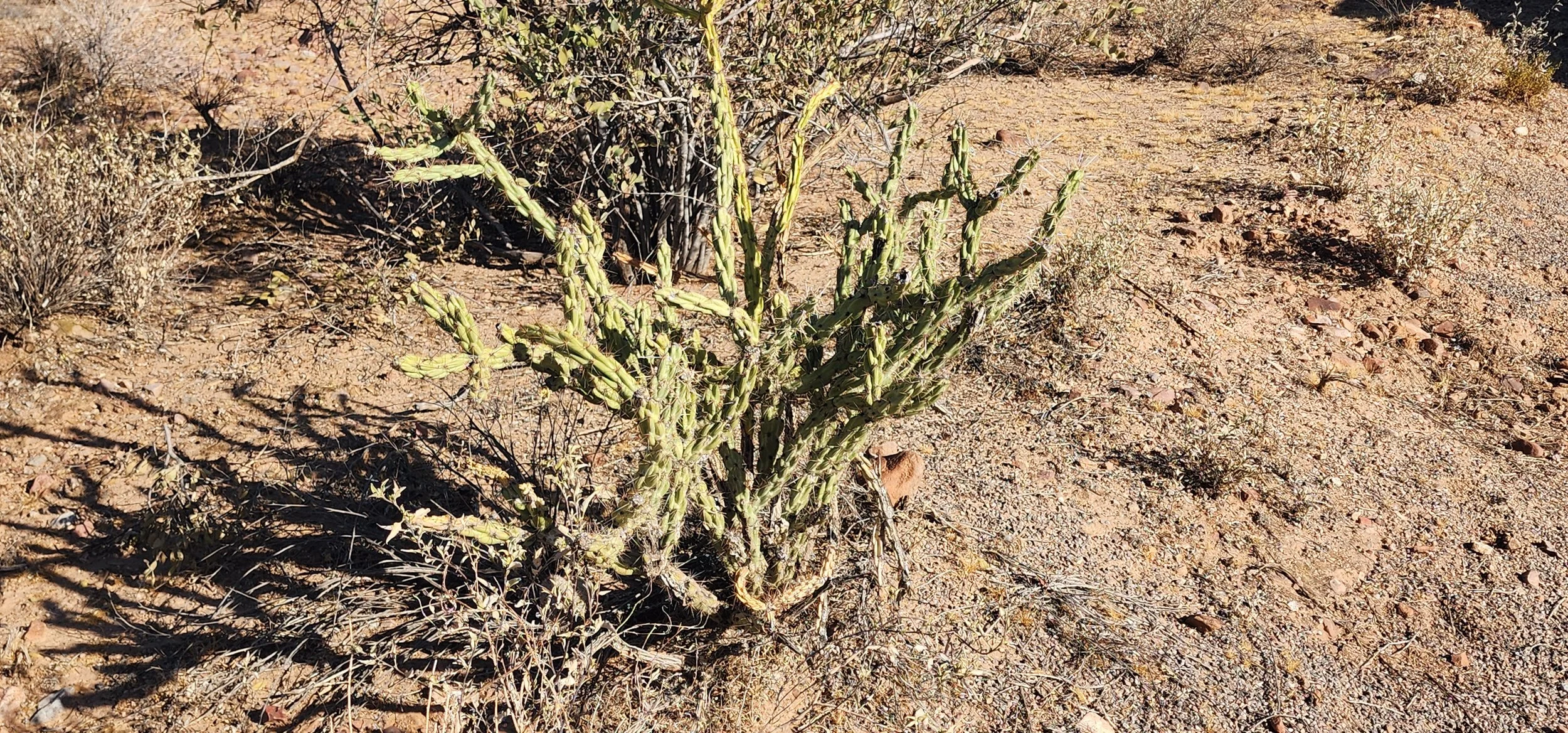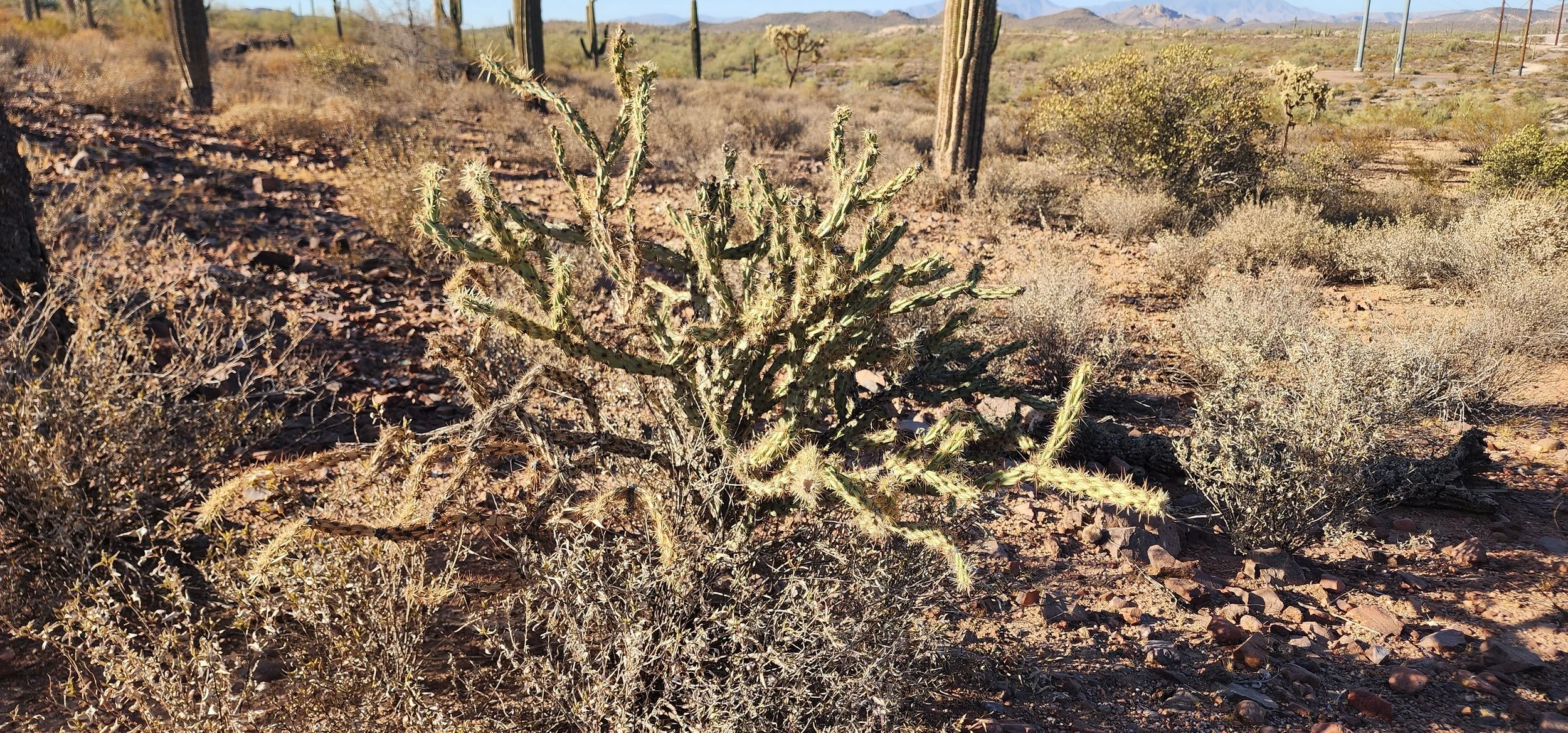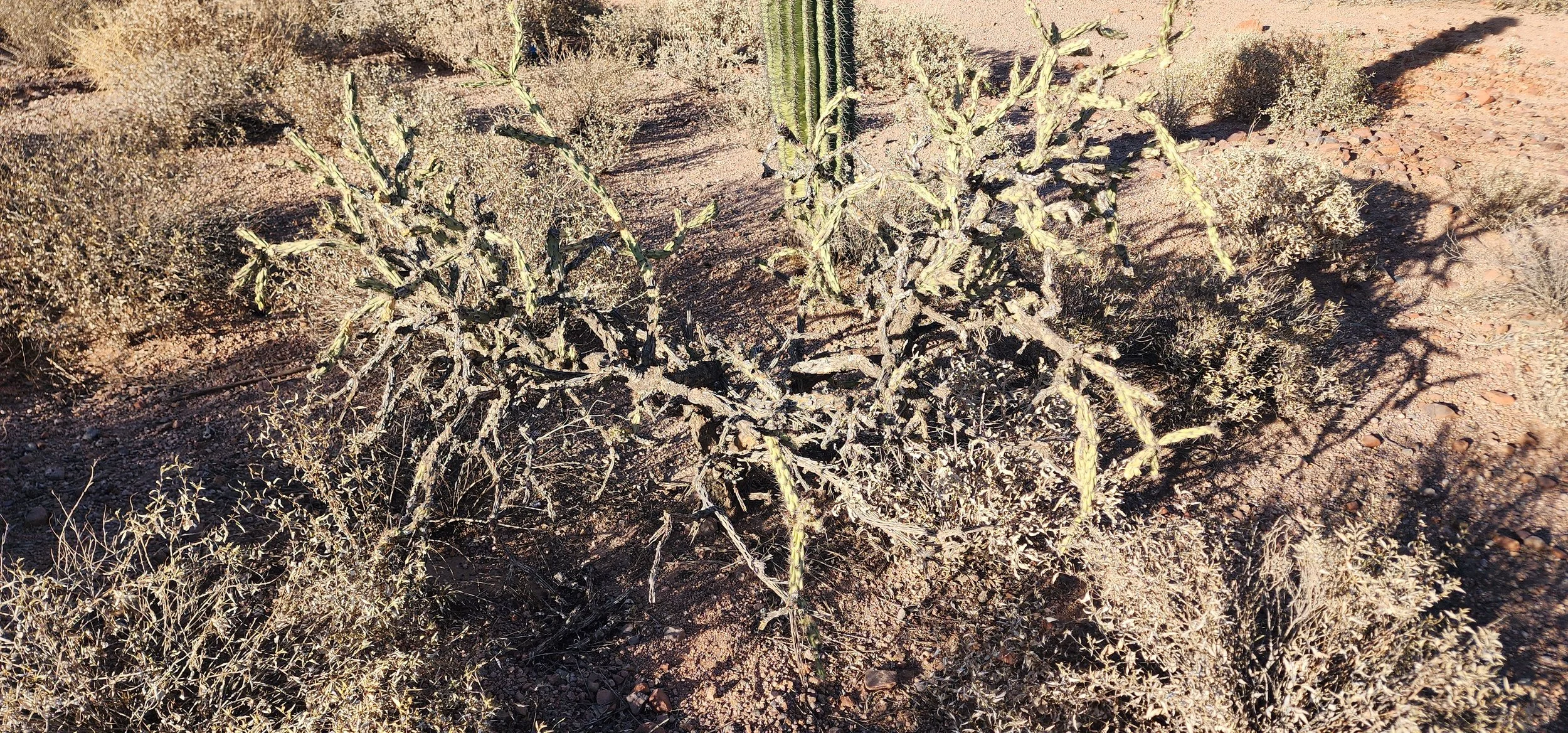
Arizona Pencil Cholla (Cylindropuntia arbuscula)
The Arizona Pencil Cholla is a distinctive, highly branched cactus native to the Sonoran Desert. This shrub-like species is recognized for its slender, cylindrical green stems that resemble pencils, giving the plant its common name. Well adapted to the intense heat and arid conditions of the Southwest, it produces striking yellow to bronze-colored flowers during the spring blooming season.
Where It Is Found
The Arizona Pencil Cholla is native to the Sonoran Desert and occurs naturally in central and southern Arizona, ranging from the Phoenix region southward to the international border with Mexico. Its distribution also extends into portions of the Mexican state of Sonora.
This species is most commonly found at elevations between 1,000 and 3,500 feet, where it grows in a variety of desert habitats. It is frequently encountered in sandy or gravelly washes, open desert flats, and on rocky slopes known as bajadas. These environments provide the well-drained soils and abundant sunlight that the cactus requires to thrive.
Growth Rate & Size
Arizona Pencil Cholla is generally considered a slow-growing cactus. Under favorable growing conditions, new stem segments may extend approximately 6 to 12 inches each year.
Most mature plants reach heights of 3 to 6 feet, forming dense, intricately branched shrubs. Particularly old or well-established specimens can occasionally grow as tall as 9 feet and may spread outward up to 5 feet across.
Root System
Like many desert cacti, the Arizona Pencil Cholla relies on a shallow but widespread root system rather than a deep taproot. Most of its roots remain close to the soil surface, allowing the plant to quickly capture moisture from brief desert rainstorms.
The root network can extend several yards beyond the main plant, maximizing its ability to absorb water whenever rainfall occurs. During prolonged drought conditions, many of the fine root hairs naturally die back to reduce moisture loss, while the thicker, corky roots remain functional and continue storing water reserves.
Defense System
The Arizona Pencil Cholla possesses several effective defenses that help protect it from herbivores and other threats. Along its stems are numerous areoles, small growth points that produce clusters of stout spines ranging from tan to yellow in color. Individual areoles may contain anywhere from none to several spines.
In addition to these larger spines, the plant is covered with tiny barbed bristles known as glochids. These fine structures detach easily when touched and can become embedded in skin, fur, or clothing, making contact with the plant unpleasant for animals and people alike.
Another important survival adaptation is its detachable stem segments. When branches are disturbed or brushed by passing animals, sections may break away from the parent plant. These detached joints can take root under suitable conditions, allowing the species to reproduce and spread vegetatively across the landscape.
Branching & Development
Unlike the Saguaro cactus, which develops arms according to a relatively predictable growth pattern, the Arizona Pencil Cholla naturally grows as a densely branched shrub. New branches begin forming from the main stem early in the plant's development, creating its characteristic bushy appearance.
Each spring, new stem segments emerge as small, fuzzy growths that gradually elongate into the narrow, pencil-shaped joints for which the species is known. As these segments mature, they become capable of producing their own new growth during subsequent growing seasons, resulting in the complex branching structure seen in older plants.