Saguaro Cactus (Carnegiea gigantea)
Overview
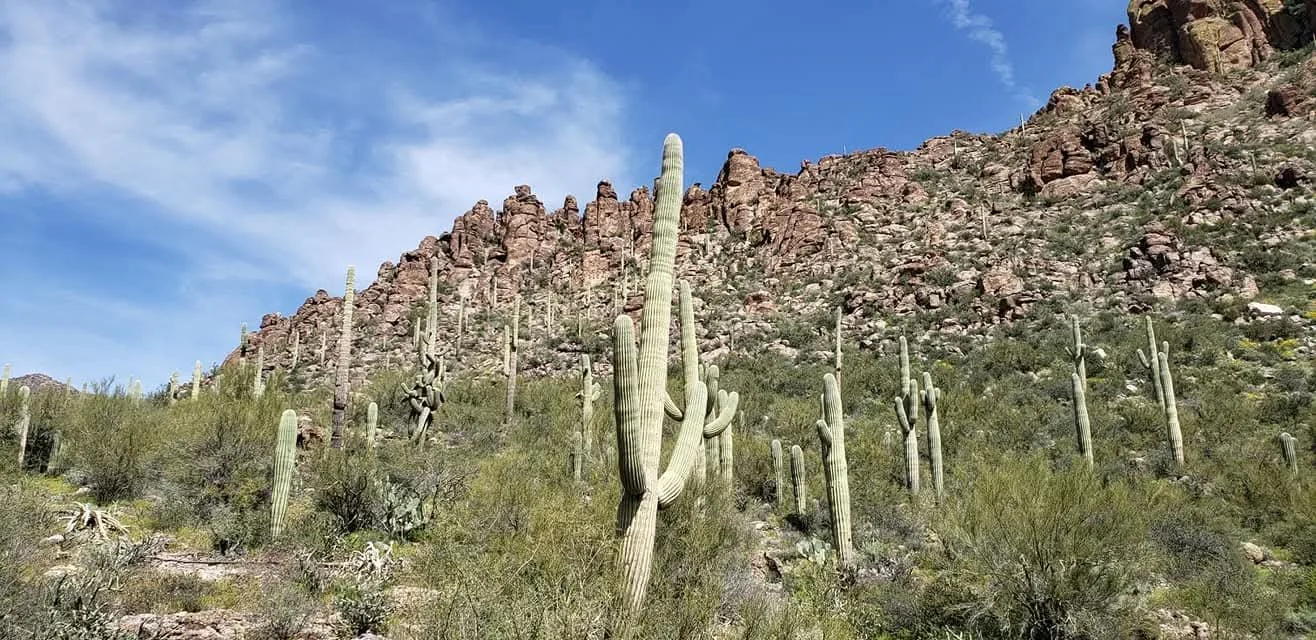
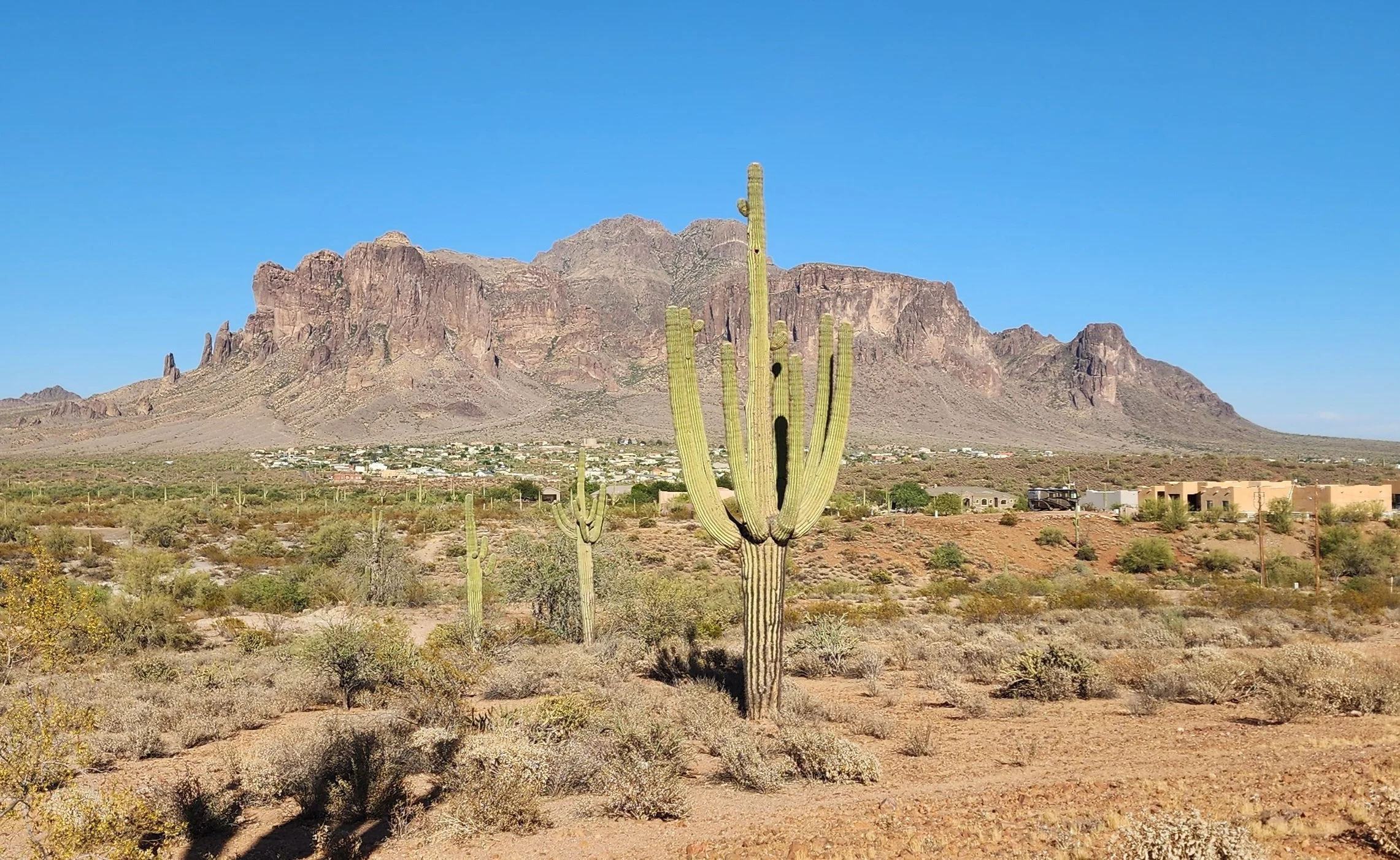
The saguaro is the largest cactus species native to the United States and one of the most recognizable plants of the American Southwest. This towering cactus is characterized by its ribbed, column-shaped trunk and the large upward-curving arms that develop as it matures. Its structure and physiology are highly specialized, allowing it to survive and thrive in the extreme conditions of the Sonoran Desert.
Distribution and Habitat
Saguaros are found exclusively within the Sonoran Desert, making them an endemic species of this unique ecosystem. Their natural range extends across southern Arizona, including areas such as Saguaro National Park, and into portions of northwestern Mexico. They are most commonly found on rocky slopes, desert flats, and well-drained soils where freezing temperatures are infrequent.
Growth Rate
The saguaro is among the slowest-growing cacti in North America. During its first eight years of life, a young plant may grow only 1 to 1.5 inches in height. Growth gradually accelerates over time, and by approximately 35 years of age, a saguaro may reach around 6.5 feet tall. At this stage, it typically begins producing its first flowers, marking the onset of reproductive maturity.
Root System
Despite their enormous size and weight, saguaros possess a relatively shallow but highly efficient root system. A single taproot extends roughly 2 feet into the ground, providing stability, while a vast network of lateral roots spreads outward just below the soil surface. These roots can extend up to 100 feet from the base of the cactus, allowing the plant to rapidly absorb rainfall before moisture evaporates from the desert soil.
Defense Mechanisms
The saguaro's primary defenses are its thick, waxy outer skin and its dense covering of sharp spines. The waxy surface helps reduce water loss in the hot desert climate, while the spines discourage animals from feeding on the plant. Individual spines can grow up to 2 inches long and also provide a small amount of shade, helping reduce surface temperatures.
Arm Development
One of the most famous features of mature saguaros is their branching arms. These arms do not appear until the cactus reaches considerable age. Most saguaros begin developing their first arm between 50 and 100 years of age, with approximately 75 years being a common average. Additional arms may develop over subsequent decades, influenced by environmental conditions such as water availability, climate, and overall plant health.
Size and Weight
Mature saguaros commonly reach heights of 40 to 60 feet, making them the tallest cacti in North America. Their pleated stems expand and contract depending on water availability, allowing them to store enormous quantities of moisture. A fully hydrated saguaro may contain up to 200 gallons of water and can weigh between 2 and 6 tons, making it one of the largest and heaviest cactus species in the world.