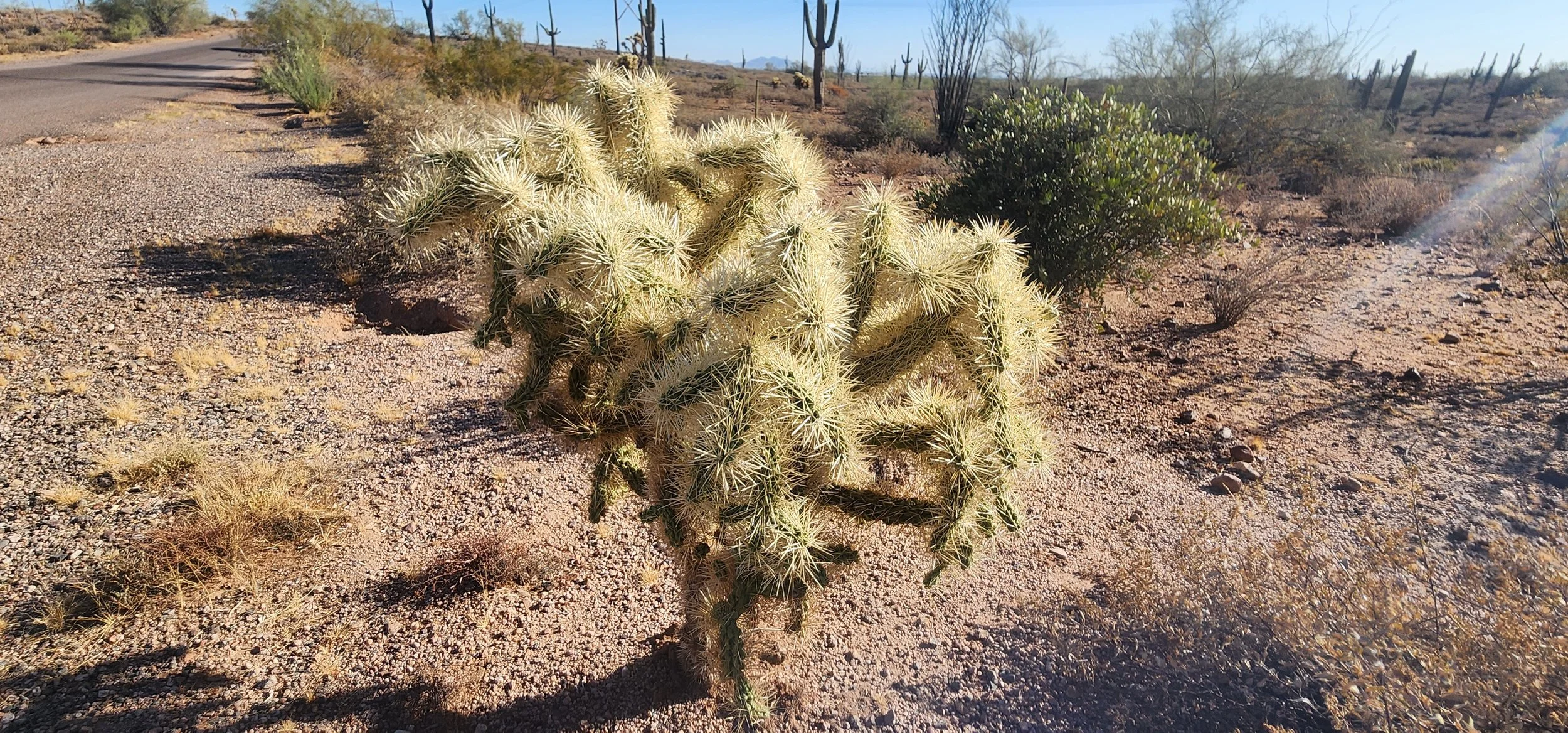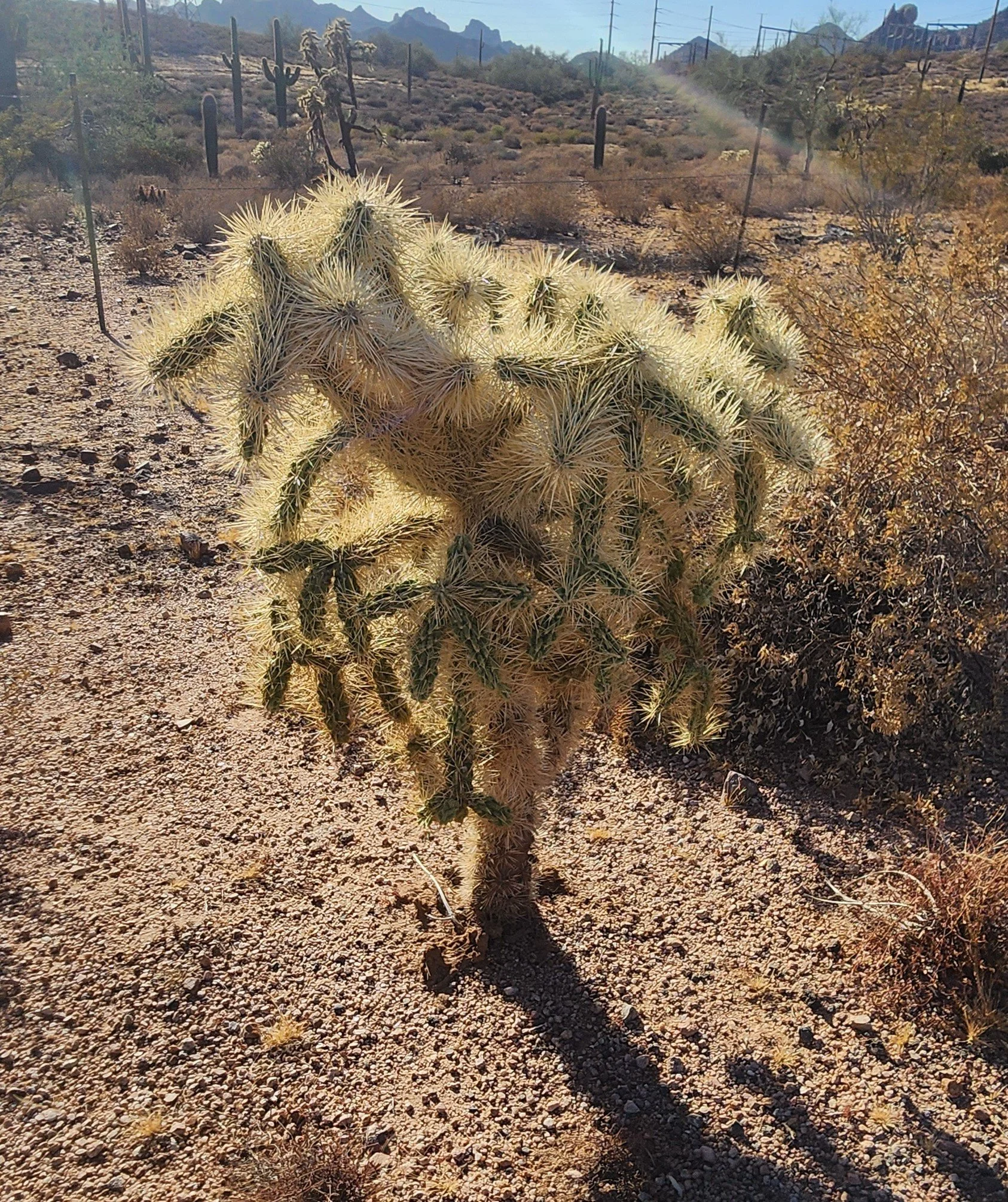
Arizona Teddy Bear Cholla (Cylindropuntia bigelovii)
The Arizona Teddy Bear Cholla is one of the most recognizable cactus species found in the American Southwest. Its dense covering of pale, fuzzy-looking spines gives it a soft, plush appearance, which inspired its common name. Despite its inviting look, this cactus is well known for its formidable defenses and is considered one of the most painful cacti to encounter in the desert.
Where It's Found
The Teddy Bear Cholla is native to the hot, dry regions of the Sonoran and Mojave Deserts. Its natural range extends across much of Arizona, portions of Southern California and Southern Nevada, and into northwestern Mexico. It thrives in open areas that receive abundant sunlight, including desert flats, rocky slopes, bajadas, and dry washes. In favorable conditions, large numbers of plants can spread across the landscape, forming dense stands often referred to as cholla forests.
Size and Growth Rate
Most mature Teddy Bear Chollas reach heights between 3 and 5 feet, although exceptional specimens growing under ideal conditions may exceed 6 feet and occasionally approach 8 feet tall. Individual plants commonly spread between 2 and 6 feet in width.
Growth is relatively slow, with plants typically adding approximately 3 to 5 inches of new growth each year. Unlike many branching cacti that develop new limbs through predictable growth patterns, Teddy Bear Chollas primarily expand through vegetative reproduction. Detached stem segments frequently root where they fall, creating entirely new plants genetically identical to the parent.
Root System
This species develops a shallow but extensive root network that remains close to the soil surface. The root system spreads outward rather than deeply downward, allowing the cactus to rapidly absorb moisture from brief desert rain events. Some of the larger corky roots may extend several yards from the plant, maximizing water collection in an environment where rainfall is often scarce and unpredictable.
Defense System
The stems are densely covered with silvery-white to golden spines that can reach approximately one inch in length. Each spine contains numerous microscopic barbs that point backward, making them exceptionally effective at attaching to skin, clothing, or fur.
One of the cactus's most notable characteristics is the ease with which its stem segments detach. Even a light touch, contact with an animal, or strong desert winds can dislodge a segment. Once detached, the barbed spines readily cling to anything they contact. This behavior has earned the plant its well-known nickname, the "jumping cholla," although the segments do not actually jump.
Removing an attached segment can be difficult because the barbed spines resist being pulled free. A common and effective method is to use a plastic comb or similar tool to gently lift and flick the segment away from the skin or footwear without driving the spines in deeper.